Concrete Slab & Foundation Work
Strong foundations built right the first time give your building a solid base that lasts for generations.
The Importance of Proper Foundation Work
Your foundation supports everything above it. Whether you are building a new home, adding a garage, or constructing a shed, the foundation determines the stability and longevity of the entire structure. A poorly installed foundation leads to cracks in walls, doors that will not close properly, and serious structural problems that cost tens of thousands of dollars to fix. Getting it right from the start prevents these nightmares.
Foundation work requires specialized knowledge that most general contractors do not have. Soil conditions, water tables, building loads, and local climate all affect how a foundation should be designed and built. We analyze these factors for every project before we start digging. The wrong approach for your specific site conditions results in settling, cracking, or even complete foundation failure within a few years.
In La Porte, our soil contains clay that expands when wet and shrinks when dry. This movement exerts tremendous pressure on foundations and causes cracking if not properly addressed. We account for this soil behavior in our foundation designs. Proper drainage, adequate depth, and correct reinforcement prevent the problems that plague many homes in our area. Your foundation needs to be engineered for local conditions, not just built to minimum code requirements.
The cost of foundation work is significant, but it is also the most important investment in any building project. Trying to save money on your foundation by using inexperienced contractors or cutting corners on materials almost always costs more in the long run. Foundation repairs are expensive, disruptive, and sometimes impossible to fully correct. Spending the money to do it right the first time protects your investment and gives you peace of mind.
Types of Foundation Work We Perform
Slab-on-grade foundations are the most common type for residential construction in Texas. The concrete gets poured directly on prepared ground in one continuous piece. This approach works well in our climate where freezing is rare and deep footings are not necessary. A properly built slab foundation provides excellent support at a lower cost than basement or crawl space foundations.
Residential and Commercial Applications
We prepare the site by excavating to the required depth and grading for proper drainage. A thick gravel base provides stability and allows water to drain away from under the slab. We install steel reinforcement in a grid pattern throughout the entire slab area. The edges get thickened to create a perimeter beam that adds strength and helps distribute building loads. Plumbing and electrical conduits are positioned before the pour so they are embedded in the concrete.
- Residential home foundations for new construction
- Garage and workshop slabs with proper reinforcement
- Shed and storage building foundations
- Room additions and home expansions
- Commercial building slabs for retail and office spaces
- Equipment pads for HVAC units, generators, and machinery
Pier and beam foundations use concrete piers sunk into the ground with wooden beams spanning between them. This type works for homes on sloped lots or in flood-prone areas where you need elevation. We drill or dig pier holes to stable soil depth and pour concrete to create solid support points. The piers must be spaced correctly based on the building weight and beam span. This foundation type costs more than a slab but provides access to plumbing and utilities underneath the home.
Commercial slabs require extra thickness and reinforcement to handle heavier loads from equipment, inventory, and foot traffic. We design these slabs based on the specific use of the building. A warehouse floor needs different specifications than a retail space. Industrial applications may require special finishes, increased thickness, or fiber reinforcement for durability. We work with engineers and architects to ensure commercial foundations meet all structural requirements and building codes.
The Foundation Installation Process
Foundation work starts with thorough site evaluation and planning. We review building plans, perform soil tests if needed, and verify property boundaries and setbacks. Local building departments require permits for foundation work, and we handle all the paperwork. Our team marks utility lines to avoid damage during excavation. This planning stage prevents costly mistakes and delays once work begins.
Excavation and site preparation require precision and attention to drainage. We dig to the depths specified in the building plans, creating level surfaces for the concrete. The excavated area extends beyond the foundation footprint to provide working room. We grade the site so water flows away from the foundation in all directions. Poor drainage is the leading cause of foundation problems, so we take this step seriously.
Building a Foundation That Lasts
The gravel base provides stability and drainage under the concrete. We install 4 to 6 inches of crushed stone and compact it thoroughly with heavy equipment. This base prevents settling and allows groundwater to drain away instead of pooling under the slab. In areas with poor soil, we may install additional base material or use ground stabilization techniques. The base must be level and properly compacted before we move to the next step.
Vapor barriers and insulation go on top of the gravel base before concrete placement. The vapor barrier is a thick plastic sheet that prevents ground moisture from wicking up into the concrete. This protection stops moisture problems that cause mold and damage to flooring. In some cases, we install rigid foam insulation under the slab for energy efficiency. These materials must be installed carefully without tears or gaps.
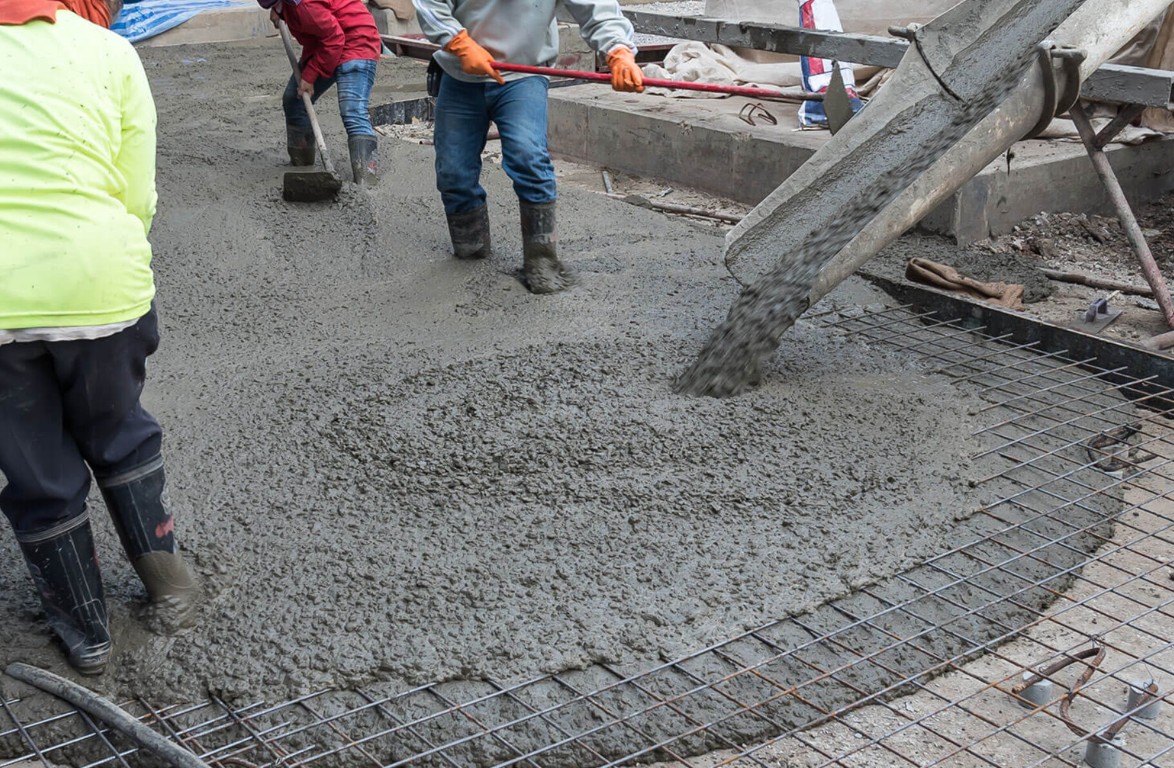
Steel reinforcement is critical for preventing cracks and handling tension forces. We install rebar in a grid pattern with bars running both directions. The spacing and size of rebar depends on building loads and foundation design. We use chairs and supports to position the rebar at the correct height within the concrete thickness. All reinforcement gets inspected before the concrete pour to ensure it meets specifications.
The concrete pour must happen quickly and correctly. We order concrete from a reputable supplier with the right mix design for foundation work. Multiple trucks may be needed for large slabs to complete the pour before the first concrete starts setting. Our crew places the concrete evenly and works it around the reinforcement. We use vibrators to eliminate air pockets and ensure proper density. The surface gets screeded level and finished according to the building requirements.
Curing is the final critical step that determines long-term strength. Concrete continues hardening for weeks after placement, but the first few days are most important. We protect the slab from drying too quickly by applying curing compounds or covering it with plastic sheeting. Proper curing develops maximum strength and resistance to cracking. We wait for the concrete to reach adequate strength before allowing construction to proceed on top of the foundation.
Preventing Common Foundation Problems
Most foundation problems stem from water and soil movement. When soil under a foundation gets too wet, it expands and pushes up on the concrete. When it dries out, the soil shrinks and leaves voids under the slab. This constant movement cracks the concrete and causes settling. We prevent these issues by installing proper drainage systems around every foundation we build.
Gutters and downspouts must direct water away from the foundation. We ensure the grading slopes away from the building so rainwater flows away instead of pooling next to the concrete. In some cases, we install French drains or perimeter drainage systems to handle excessive water. These systems collect water before it reaches the foundation and route it to a safe discharge point. The small additional cost prevents major problems later.
Tree roots can damage foundations by absorbing moisture from the soil and causing settling. Large trees close to buildings should be evaluated for potential problems. We advise clients about tree placement and may recommend root barriers in some situations. Proper landscaping and irrigation also affect foundation performance. You want consistent soil moisture around your foundation, not cycles of wet and dry.
Plumbing leaks under slabs cause serious foundation damage over time. We take care during installation to protect plumbing lines and properly sleeve pipes that pass through concrete. Using quality materials and proper installation techniques prevents leaks. If you notice unexplained water bills or wet spots, address them immediately before foundation damage occurs.
Regular maintenance protects your foundation investment. Keep gutters clean and functioning properly. Maintain consistent soil moisture with appropriate watering during dry periods. Watch for signs of foundation movement like cracks in walls, sticking doors, or gaps around windows. Catching problems early allows for less expensive repairs. Most foundation issues develop slowly over years, giving you time to address them if you stay alert.
We build foundations to last using proven methods and quality materials. Our experience in La Porte means we understand local conditions and code requirements. When you hire us for foundation work, you get a team that takes pride in doing the job right. A skilled concrete slab contractor brings that same level of local knowledge and care to every pour. Your foundation will support your building for decades without major problems if built correctly from the start.
Frequently Asked Questions
Ready to Get Started?
Contact us today for a free consultation and detailed quote for your foundation project.