Retaining Walls & Concrete Masonry
Control erosion, create usable space, and add structure to sloped properties with professional masonry work.
Why You Need Retaining Walls
Sloped properties present challenges that flat lots don't have. Water runs downhill and can wash away soil, create erosion channels, and undermine structures. Steep slopes limit how you can use your outdoor space and make maintenance difficult. Retaining walls solve these problems by holding back soil and creating level areas where you need them. The right retaining wall turns unusable sloped ground into functional outdoor living space.
Erosion control is one of the main reasons property owners install retaining walls. Heavy rains in Texas can move surprising amounts of soil in a short time. You might see gullies forming in your yard, exposed tree roots, or soil washing onto driveways and walkways. This erosion threatens foundations, damages landscaping, and creates ongoing maintenance headaches. A properly designed retaining wall stops the erosion and protects your property from water damage.
Creating usable outdoor space often requires retaining walls on sloped lots. You might want a level patio area, a flat section for a garden, or terraced landscaping beds that turn a steep slope into an attractive feature. Retaining walls make these projects possible by holding back soil at different elevations. Professional masonry work ensures these walls stay stable and attractive for decades while serving their practical purpose.
Property line issues sometimes require retaining walls when your land sits higher or lower than your neighbor's lot. You need a structure that clearly defines the boundary while managing the elevation change. Municipal codes often have specific requirements for retaining walls near property lines, especially taller walls that need engineering. We navigate these requirements and build walls that meet regulations while respecting the relationship between neighboring properties.
Types of Retaining Walls and Masonry
Different retaining wall systems work better for different situations. The height of the wall, soil conditions, how much water flows through the area, and your aesthetic preferences all affect which type makes sense for your property. We help you choose the right system based on engineering requirements and what fits your needs and budget.
Common Retaining Wall Options
- Poured concrete walls for maximum strength and durability
- Concrete block walls that offer design flexibility and efficiency
- Segmental retaining walls using interlocking block systems
- Brick masonry for traditional appearance and long life
- Stone veneer over concrete for natural appearance
- Decorative concrete masonry units with various textures and colors
Poured concrete retaining walls provide the strongest solution for tall walls or challenging soil conditions. We build forms, install heavy reinforcement, and pour concrete to create a monolithic structure. These walls can be finished smooth, textured, or covered with stone or brick veneer. Poured concrete works well when you need maximum strength and when the wall will be part of a building foundation or major structural element.
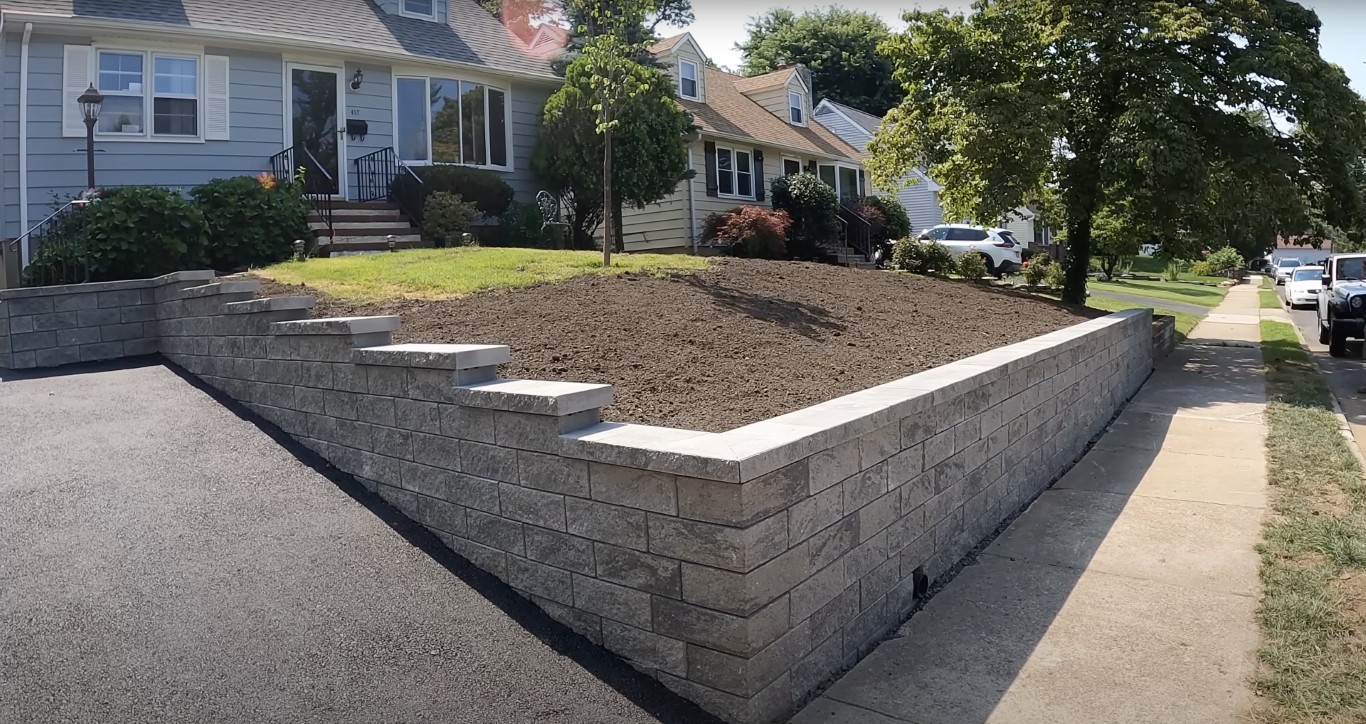
Concrete block and masonry unit walls offer good strength with faster installation than poured concrete. Modern segmental retaining wall systems use specially designed blocks that interlock and create stable walls without mortar. These systems work well for residential applications up to about 4 feet tall. A well-built block retaining wall relies on consistent unit sizing and proper base compaction to hold its alignment over time. Taller walls or those with significant loads require engineering and often reinforcement with tiebacks or geogrids that anchor into the soil behind the wall.
Brick and stone masonry creates beautiful walls with classic appearance. We lay each brick or stone in mortar to create strong bonds between units. These walls need proper footings and drainage just like other retaining wall types. Foundation work for masonry walls ensures they stay stable and level over time. The additional labor for brick and stone makes these walls more expensive than concrete block systems, but many property owners prefer the aesthetic.
Proper Design and Installation
Retaining walls are structural elements that need proper engineering, not just stacking blocks or pouring concrete. The wall has to resist pressure from soil pushing against it, water pressure during wet periods, and its own weight. Poor design or installation leads to walls that crack, lean, or fail completely within a few years. A block retaining wall built without proper batter, drainage, and compacted base is among the most common failure types we see. We take a systematic approach that addresses all the forces acting on your retaining wall.
Critical Elements for Success
Foundation and footing depth depends on wall height and soil conditions. Taller walls need deeper footings to provide stability. The footing sits on undisturbed soil or properly compacted fill, never on loose or organic material. We excavate below the frost line even though our freezing is minimal in Texas, because proper depth provides stability regardless of weather conditions. The footing needs to be level and wide enough to distribute the wall's weight.
Drainage is the most important aspect of retaining wall design that amateurs often overlook. Water building up behind the wall adds enormous pressure that can push the wall over or cause failure. We install drainage systems that collect water and channel it away before pressure builds up. This typically includes gravel backfill, perforated drain pipes at the base, and weep holes through the wall face. Proper drainage makes the difference between walls that last decades and walls that fail in just a few years.
Reinforcement requirements increase with wall height. Short walls under 3 feet might not need reinforcement beyond the strength of the wall units themselves. Taller walls require steel reinforcing bars in poured concrete walls or geogrid and tieback systems for block walls. Engineering calculations determine exactly how much reinforcement your wall needs based on the specific conditions at your property.
Backfill material and compaction affect long-term stability. We use properly graded gravel or crushed stone directly behind the wall to facilitate drainage. This material gets compacted in layers to prevent settling that can pull the wall backward or create voids. The compaction process takes time but is essential for walls that will perform as designed. Rushing this step to save time is a mistake that leads to problems you'll pay to fix later.
Local building codes often require permits and inspections for retaining walls over certain heights. The threshold varies by jurisdiction but typically ranges from 3 to 4 feet. Walls requiring permits need engineered plans stamped by a licensed engineer. We coordinate with engineers and handle the permitting process as part of our service. Having properly permitted and engineered walls protects your investment and prevents issues if you sell your property or need insurance claims related to wall failure.