Sidewalks, Walkways & Flatwork
Create safe, attractive pathways that connect your outdoor spaces and enhance your property appeal.
Why Concrete Walkways Make Sense
You need safe paths to get from your driveway to your front door, from your patio to your garden, and between different areas of your yard. Concrete walkways give you solid footing in all weather conditions. Rain turns grass into mud and makes gravel slippery, but concrete stays firm and provides good traction. You can walk confidently without worrying about wet shoes, muddy tracks in your house, or slipping on loose stones.
The right walkways improve your daily life in ways you might not think about until you have them. Kids can ride bikes without worrying about getting stuck in soft ground. You can roll out trash cans and move lawn equipment without fighting dirt and grass. Guests know exactly where to walk instead of cutting across your lawn and creating worn paths. Concrete defines the flow of your outdoor spaces and makes everything more usable.
Property value gets a real boost from well-designed concrete pathways. When potential buyers look at homes, they notice how easy it is to move around the property. Professional concrete installation shows that you maintain your home properly. Clean, smooth walkways make your entire property look more finished and cared for. Simple improvements like adding a front walkway or connecting your driveway to your back patio can add hundreds or even thousands to your home's value.
Concrete offers more design flexibility than most people realize. You can pour plain gray slabs for a clean, functional look, or choose from stamped patterns that mimic brick, stone, or tile. Borders in contrasting colors add visual interest without a big price increase. Curves, varying widths, and creative layouts help your walkways blend with landscaping instead of just cutting straight lines through your yard. We work with you to create paths that match your property's style and your personal preferences.
Types of Flatwork We Install
Flatwork covers all the horizontal concrete surfaces on your property. Each type serves a different purpose and has specific requirements for proper installation. We handle the full range of residential and commercial flatwork projects, from basic sidewalks to complex multi-level installations.
Common Flatwork Projects
- Front walkways from the street or driveway to your entrance
- Side yard paths connecting different areas of your property
- Garden paths that wind through landscaping and planting beds
- Public sidewalks along the street edge of your property
- Commercial sidewalks and pedestrian areas for businesses
- ADA compliant ramps and accessible pathways
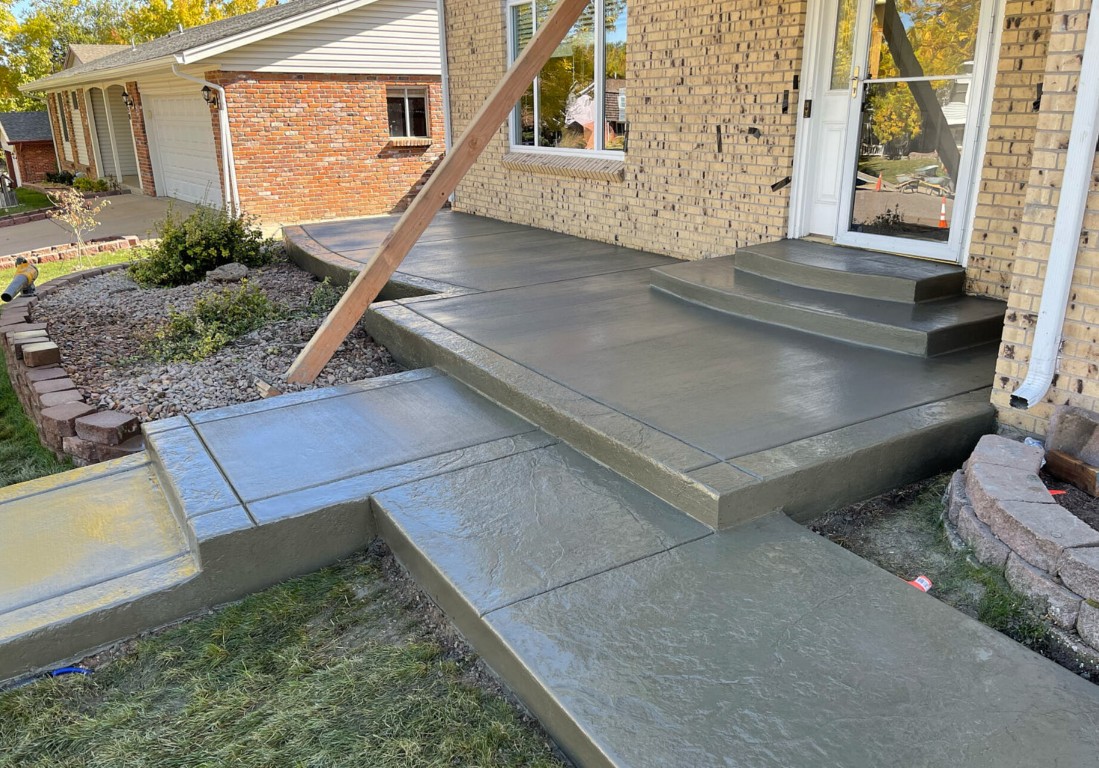
Front walkways get the most attention because everyone who visits your home uses them. We make sure these paths have the right width for comfortable walking, usually at least 36 inches but often 48 inches or wider. Proper slope is critical for drainage so water runs off instead of pooling. We also install control joints that manage cracking and keep your walkway looking good for decades. The entrance to your home deserves quality work that stands up to constant foot traffic.
Garden and side yard paths need different considerations. These routes often curve and change width to fit around landscaping, trees, and other features. We can create narrower paths where space is limited and wider sections where you want areas for container plants or seating. Colored or stamped concrete helps these paths blend with your garden design. The goal is creating functional routes that enhance your landscaping instead of fighting against it.
Commercial flatwork faces heavier use and stricter requirements than residential projects. Businesses need sidewalks that can handle crowds of customers, meet ADA accessibility standards, and maintain good appearance with minimal maintenance. Commercial concrete work requires proper permitting, inspections, and often coordination with municipal codes. We navigate all those requirements and deliver sidewalks and flatwork that meet regulations while serving your business needs.
Installation Process for Quality Results
Quality walkways start with careful planning. We look at how water flows across your property, where existing utilities run underground, and how the path needs to connect different areas. Trees and their root systems affect where we can pour concrete and how deep we need to excavate. Poor planning leads to drainage problems, cracked concrete, and paths that don't quite connect the way you need them to.
How We Build Walkways That Last
Excavation removes grass, topsoil, and any soft material that would compress and cause settling. We dig deep enough to install a stable base layer, usually 4 to 6 inches of compacted gravel. This base provides drainage and creates a solid foundation that won't shift when the ground gets wet. La Porte's clay soil expands and contracts with moisture changes, so proper base preparation is not optional if you want concrete that stays level.
Forms define the edges and shape of your walkway. We set these boards carefully to create the exact width, curves, and elevation you need. The slope has to be just right so water runs off without creating noticeable unevenness. Most walkways slope slightly away from buildings to direct water toward landscaping or drainage areas. Getting these details right during setup makes the difference between amateur work and professional results.
The concrete itself needs the right mix design for exterior walkways. We use concrete that can handle freeze-thaw cycles and has good strength for foot traffic. Reinforcement methods depend on the walkway width and expected use. Narrow garden paths might only need fiber reinforcement mixed into the concrete, while wider main walkways benefit from wire mesh or rebar. We finish the surface with a texture that provides slip resistance even when wet.
Curing determines how strong your concrete becomes. Fresh concrete needs to stay moist for several days while it gains strength. We protect new walkways from drying out too quickly, especially in hot weather. During this curing period, we keep people off the concrete so the surface doesn't get damaged. Rushing the curing process leads to weaker concrete that develops surface problems and won't last as long as properly cured work.
Final details like sealing and edging complete the installation. We clean up construction debris, remove forms, and backfill along the edges. Sealing the concrete protects it from moisture, staining, and surface deterioration. Good cleanup and finishing touches show professional pride in workmanship. Your new walkway should look great the day we finish and continue looking good for many years with minimal maintenance.